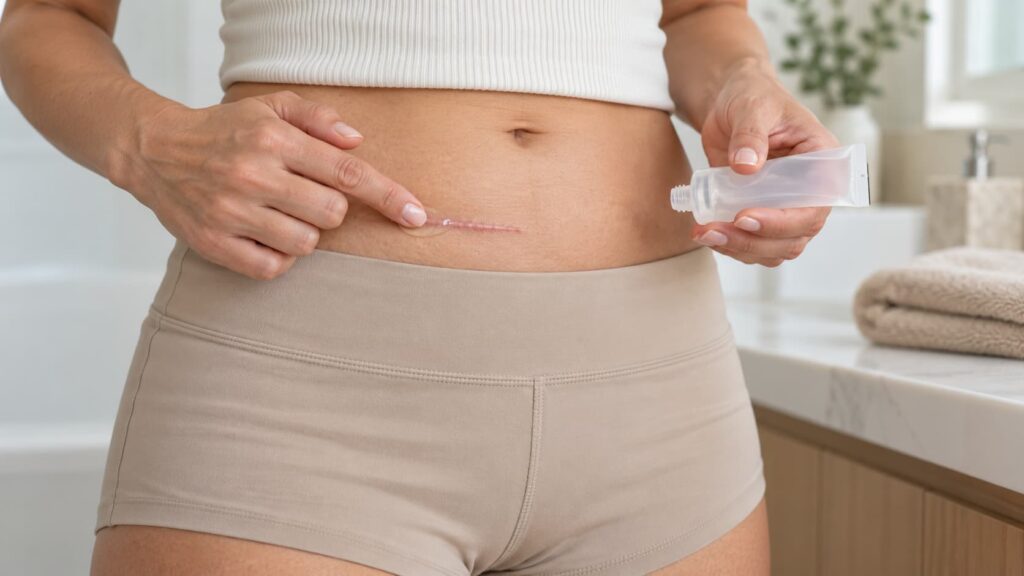
The tummy tuck recovery Miami It lasts on average between 6 and 8 weeks, although the complete healing process can extend up to 12 months.
This period encompasses everything from initial pain management and drainage to a gradual return to work, exercise, and daily life. According to the American Society of Plastic Surgeons (ASPS), Following post-operative instructions is the factor that most impacts the quality of the final result.
At New Body Surgery Miami, we accompany each patient with a bilingual protocol that combines expertise in plastic and bariatric surgery, designed to make your recovery safe, predictable, and comfortable.
What is tummy tuck recovery?
The recovery of a abdominoplasty is the period in which The body heals the tissues repositioned during surgery, It reabsorbs the swelling and adapts to its new shape.
It is not a uniform process: it varies according to the technique used (classic, mini or extended tummy tuck), the profile of each patient and, above all, the discipline with postoperative care.
Patients who undergo abdominoplasty after massive weight loss—frequently after bariatric surgery— they usually require more detailed monitoring, because the skin and tissues respond differently.
At New Body Surgery Miami, we frequently work with this profile, thanks to our dual experience in bariatric and plastic surgery.
Week-by-week recovery schedule
Knowing your schedule reduces anxiety and helps you plan work, travel, and family routines. Based on ASPS data and our clinical practice, this is the typical process:
- Days 1 to 3: Medical observation, active drainage, and moderate pain controlled with medication. Short walks inside the house.
- Week 1: Rest at home with a post-operative support belt 24/7. Sleep in a semi-fetal position.
- Week 2: Removal of drains, frequently between days 7 and 14. Progressive reduction of swelling.
- Weeks 3 and 4: Back to office work. No physical effort or lifting heavy objects.
- Week 6: Gradual start of light cardiovascular exercise, with medical authorization.
- Weeks 8 to 12: Full return to physical activity, including abdominal exercises.
- Months 6 to 12: Scar maturation, which becomes lighter and flatter.
Every step matters because skipping steps increases the risk of seroma, dehiscence, or widened scars.
Read also:
👉 How many kilos should you weigh for an abdominoplasty?
Essential postoperative care
A practical checklist is worth more than any isolated piece of advice. These are the care tips that will have the greatest impact on your recovery:
- Use the post-operative girdle continuously for 4 to 6 weeks.
- Sleep in a semi-fetal position, with pillows under your knees.
- Keep drains clean and record the daily volume.
- Drink plenty of water and maintain a diet rich in protein.
- Walk several times a day from the first day to prevent thrombosis.
- Avoid tobacco and alcohol for at least 4 weeks.
- Begin manual lymphatic massage from the second week onwards, as directed by a doctor.
- Attend all post-operative follow-up appointments.
Common symptoms during recovery
Knowing what's normal prevents unnecessary worry. The following table summarizes common symptoms:
| Symptom | When does it happen? | When does it disappear? |
| Abdominal bloating | Days 1 to 14 | It reduces significantly within 6 weeks. |
| Feeling of tightness | Weeks 1 to 4 | It improves with progressive mobility |
| Numbness of the skin | Weeks 1 to 8 | It usually resolves within 6 to 12 months |
| Bruises | Weeks 1 to 3 | They gradually disappear |
| Emotional changes | First week | Frequent and transient |
If any symptoms worsen instead of improving, you should contact your surgeon immediately.
When to resume work, exercise, and daily life
Each activity has its recommended time, and respecting them protects your result:
- Office work: weeks 2 to 3, provided it does not involve physical exertion.
- Drive: week 2, once opioid medication has been discontinued.
- Sexual relations: Weeks 4 to 6, depending on personal comfort.
- Light cardiovascular exercise: week 6, with medical authorization.
- Weightlifting and abdominal exercises: weeks 8 to 12.
Forcing these timeframes can compromise internal healing, especially the repair of abdominal diastasis.
How to speed up your recovery safely
Accelerating doesn't mean skipping steps, but rather optimizing what your body is already doing. These habits demonstrate a real impact on healing:
- Nutrition rich in protein, zinc and vitamin C.
- Progressive mobility from day one.
- Manual lymphatic drainage with a certified professional.
- Sufficient rest and stress management.
- Strict sun protection on the scar for 12 months, to avoid hyperpigmentation.
Read also:
👉 What are the risks of abdominoplasty?
Why choose New Body Surgery Miami for your tummy tuck recovery in Miami?
In New Body Surgery Miami The support doesn't end when you leave the operating room.
We designed a follow-up protocol that includes check-up appointments, a specialized compression garment, nutritional guidance, and a network of lymphatic drainage professionals. All in Spanish and English, without communication barriers.
Our dual experience in bariatric and plastic surgery positions us as a reference for patients who have lost significant weight and are looking for a harmonious body contour.
If you are considering a tummy tuck, schedule your evaluation consultation with our team and receive a personalized plan for your recovery.
New Body Surgery Miami
Ready to take the next step?
Schedule your consultation and find out if you're a candidate. No obligation — just an honest conversation about your situation.
Contact us todayFrequently asked questions about tummy tuck recovery
Intense pain usually lasts between 3 and 5 days and is controlled with medication. From the second week onward, most patients describe mild discomfort or a feeling of tightness.
It is often recommended to sleep in a semi-fetal position for the first 2 to 3 weeks, to reduce tension on the incision.
The scar doesn't disappear, but it matures and fades gradually. With proper care, it becomes thin and discreet beneath the bikini line.
Yes. Hormonal changes and limited movement cause frequent emotional ups and downs during the first week, which tend to resolve naturally.