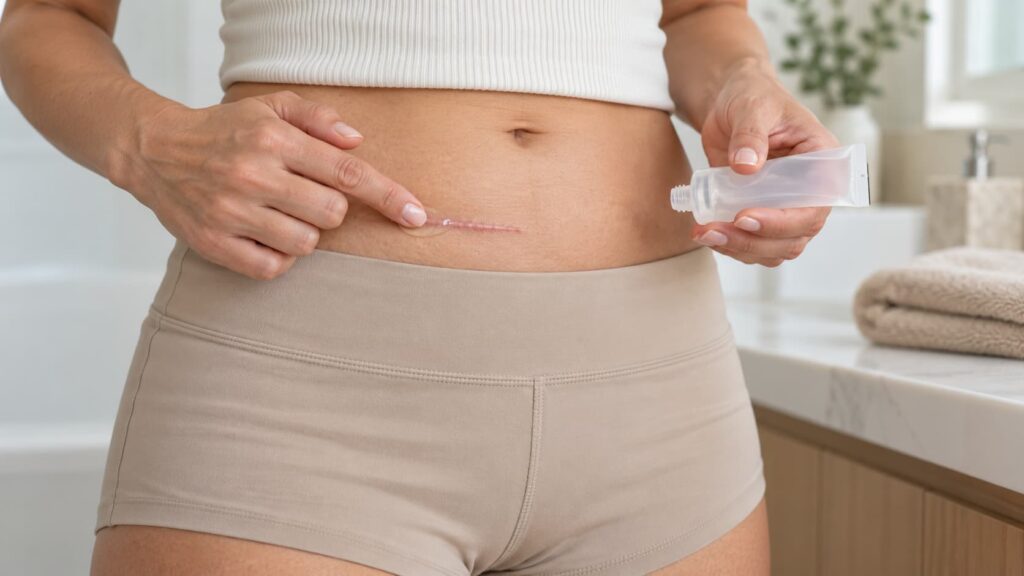
Many women who consider abdominal surgery begin their search with the same question: How many kilos should you weigh for an abdominoplasty?
It's a common question, because many people believe there's an exact weight they must reach before undergoing the procedure.
In reality, plastic surgeons don't just evaluate the number on the scale. The analysis includes factors such as weight stability, skin quality, fat distribution, and medical history.
Understanding these aspects It helps determine if this might be a good time to consider surgery. and what to expect during an evaluation with a specialist.
Is there a minimum or maximum weight to perform a tummy tuck?
There is no universal weight limit that determines who can or cannot have an abdominoplasty..
Body weight is just one of the factors analyzed during the consultation. Surgeons typically consider several factors before recommending the procedure, such as:
- ratio between fat and muscle mass
- amount of excess skin on the abdomen
- condition of the abdominal muscles
- Weight stability in recent months
Another indicator that is also analyzed during the evaluation is the body mass index (BMI).
BMI is a measure that relates weight to height and is used as a reference to assess overall health before surgery. In many cases, surgeons prefer to perform elective procedures when the BMI falls within ranges considered safer.
This occurs because BMI can influence important aspects such as:
- safety during anesthesia
- healing process
- postoperative recovery
However, BMI is not used in isolation either. Two Patients with the same index can have very different body characteristics.
For this reason, during the consultation the specialist analyzes the complete set of factors of the body and the patient's medical history.
Thus, two women with the same weight or BMI may receive different recommendations. One may be a candidate for surgery because she has excess skin after pregnancy or significant weight loss, while another might need to stabilize her weight first before considering the procedure.
Why stable weight is more important than a specific number on the scale
If there is one factor that weighs more than any number, it is the stability of the weight. The usual recommendation is to maintain the same weight for at least six consecutive months. before considering a tummy tuck.
Why? Because of weight fluctuations after surgery can directly affect the results. The skin that was repositioned and the muscles that were repaired may be affected if a significant weight gain or loss occurs during the postoperative period.
This is especially important for women who have undergone a significant weight loss process. abdominoplasty After losing weight, in fact, it is one of the most common indications we see in consultation, and also one of those that generates the most noticeable changes in body contour.
When you lose a lot of weight, your body changes, but your skin doesn't always adapt at the same rate. No exercise can completely correct that situation., because it's not just muscle or fat, but skin tissue that has lost elasticity.
Abdominoplasty after bariatric surgery
For women who have gone through a bariatric surgery, The path to abdominoplasty has some important characteristics. The accelerated weight loss that occurs after bariatric surgery is one of them. It usually leaves a significant excess of skin on the abdomen, And this is precisely the type of situation in which abdominoplasty can complete the transformation of the body contour.
In this patient profile, the evaluation is usually even more individualized. Factors such as the following are considered:
- the time elapsed since bariatric surgery
- weight stability
- nutritional status
- and other aspects that may directly influence the safety of the procedure.
When these factors are aligned, abdominal plastic surgery in women who have undergone bariatric surgery can generate profound changes, not only in physical appearance, but also in self-esteem and quality of life.
Sagging skin, separated muscles, and other signs that it may be the right time
Sometimes the body gives signals that go beyond the scale. If you identify with any of these points, it might be a good time to consider a medical evaluation:
- Loose skin on the abdomen This sagging skin persists even after months of exercise and a balanced diet. It's common after pregnancy, bariatric surgery, or significant weight loss, and is precisely the type of situation that abdominoplasty for loose skin effectively addresses.
- Abdominal diastasis, This refers to the separation of the rectus abdominis muscles, a common issue after pregnancy. No exercise can completely close this separation. An abdominoplasty (tummy tuck) surgically repairs this structure, restoring strength and contour to the abdomen.
- Persistent discomfort in the abdominal region, Even when you feel good about your weight. When the problem is no longer related to weight loss, but to the skin left behind after a body transformation process, that may be a sign that the time is right.
Knowing when to get an abdominoplasty depends on recognizing that your body is ready, that your weight remains stable, and that what bothers you won't change with more diet or more exercise.
What makes a well-performed abdominoplasty different?
A well-indicated and performed abdominoplasty can permanently transform the abdominal contour. However, the lasting results of an abdominoplasty depend primarily on three factors.
Precise surgical technique
The quality of the surgery directly influences the naturalness of the result, the discretion of the scars, and the harmony with the rest of the body. At New Body Surgery Miami, we work with a personalized approach, as each patient has different body characteristics.
Post-operative care.
Recovery from abdominoplasty typically takes between two and four weeks before resuming light activities, while more strenuous physical activity may require up to two months. Each patient receives detailed instructions because recovery is an integral part of the final result.
Weight maintenance after surgery
Surgery does not prevent future weight fluctuations. However, when the patient maintains healthy habits, the results can last for many years.
What sets us apart is not only the surgical technique, but the commitment to the final result for each woman who trusts our clinic.
Ready to find out if a tummy tuck is right for you?
If you've made it this far, you're already asking the right question. Understanding who can have abdominal surgery starts precisely like this: by seeking information from those who truly know the subject.
The next step is a conversation with our team. Schedule your assessment at New Body Surgery Miami — No commitment, no pressure, no rush. We'll analyze your case individually to give you clear guidance on what's possible, what's safe, and what can transform how you feel in your own body.
New Body Surgery Miami
Ready to take the next step?
Schedule your consultation and find out if you're a candidate. No obligation — just an honest conversation about your situation.
Contact us todayFrequently asked questions about weight and abdominoplasty
There is no specific weight that all patients must reach. Surgeons usually recommend that the person be close to their stable weight before considering surgery.
In many cases, it is recommended to wait until weight loss is complete. Significant changes after surgery can affect the final abdominal contour.
Abdominoplasty is not considered a weight-loss procedure. The primary goal is to remove excess skin and improve the shape of the abdomen.
The range may vary depending on the patient. The surgeon evaluates BMI along with other health factors before recommending the procedure.
Surgery may include the removal of localized fat and excess skin. However, it does not replace healthy eating habits or physical activity.