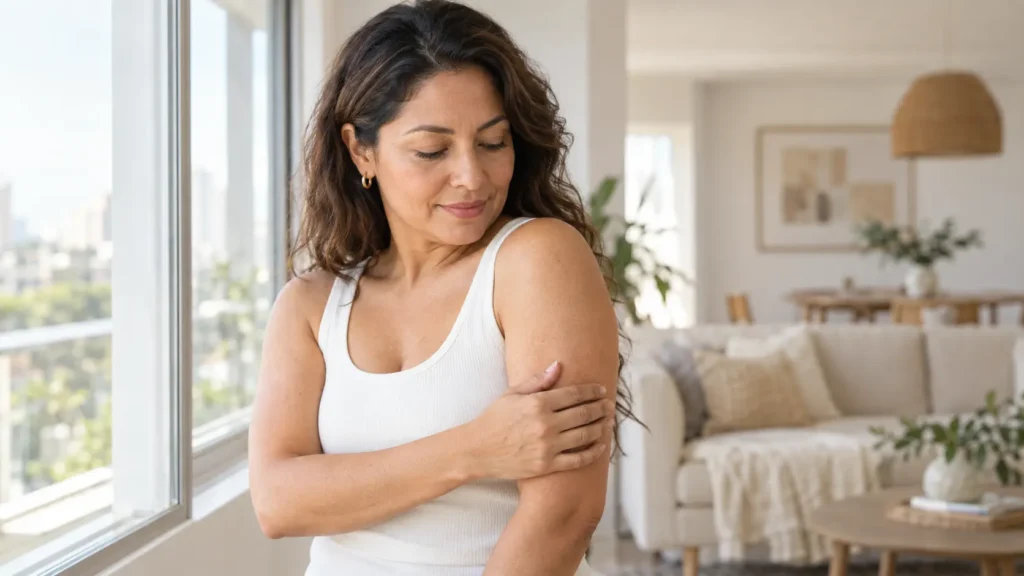
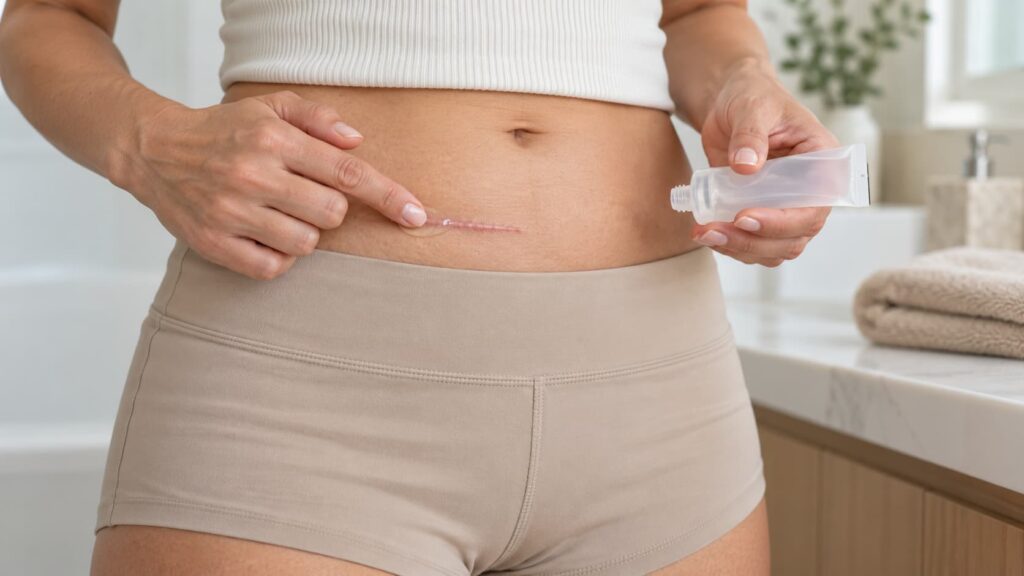
One of the most common questions people have about gastric sleeve surgery isn't exactly about the procedure itself, but on the scars.
Are they going to appear?
Will they be big?
Can they be disguised?
In most cases, the gastric sleeve scars They are smaller and more discreet than many people imagine..
In this article, we will explain what scars look like after surgery, where they appear, how they evolve over time, and what care helps improve their appearance.
Does gastric sleeve surgery leave a scar?
Yes, gastric sleeve surgery leaves scars.
But the important point here is how those scars are made.
The surgery is performed by laparoscopy, a minimally invasive technique that uses small incisions in the abdomen to introduce surgical instruments.
This means:
- No big cuts
- Less skin trauma
- Smaller scars that are easier to care for
For most people, scars are inconspicuous and tend to improve considerably over time.
How many incisions are made during the surgery?
In most cases, they are performed 4 to 5 small cuts, each with a specific function during the procedure.
Most common areas of the abdomen
The incisions are usually located:
- Near the navel
- In the upper part of the abdomen
- At lateral points, below the ribs
These areas are chosen precisely to facilitate surgical access and also to allow for better healing.
What is the size of the gastric sleeve scars?
Most incisions measure between 0.5 and 1.5 centimeters. These are very small incisions, and that is precisely one of the great advantages of the laparoscopic technique.
To get a clearer idea:
- Small incisions: 0.5 to 0.8 cm (size of a lentil)
- Medium incisions: 1 to 1.2 cm (size of a bean)
- Larger incision: 1.5 to 2 cm (size of a small coin)
It's important to understand that not all scars are the same size. Generally, you'll have 3 or 4 very small scars y one a little bigger, which is where the stomach is removed during surgery.
How do scars evolve over time?
Understanding how your scars will evolve over time is essential to maintaining realistic expectations and avoiding unnecessary worries during the healing process.
Scars go through several phases before reaching their final appearance, and that's completely normal.
First weeks after surgery
During this period, it is common to observe:
- Redness
- Mild swelling
- Sensitivity to touch
This stage is part of the normal healing process.
After a few months
Over time:
- The color tends to lighten
- The scar becomes thinner
- The skin's texture becomes more even.
For many people, after a few months, the gastric sleeve scars They become discreet and easy to conceal.

Factors that influence the appearance of scars
Not all scars heal the same way, and that's perfectly normal. Several factors influence how your scars will look, and understanding them can help you maintain realistic expectations and, in some cases, take preventative measures.
1. Genetics and skin type
This is probably the most important factor and, unfortunately, the only one over which you have no control.
Some people simply heal better than others — it's in their DNA. People with lighter skin tend to have less visible scars, while people with darker skin may develop more pigmented scars or even keloids.
If you have a family history of hypertrophic or keloid scars, It is important to inform your surgeon before surgery.
2. Age
Age significantly influences the healing process. Younger skin tends to heal faster and with a better initial response, but they also have a greater tendency to form hypertrophic scars.
In contrast, more mature skin heal more slowly, but they generally result in thinner, flatter scars.
3. Postoperative care
This is the factor over which you have the most control. Strictly following medical advice can make a big difference in the final appearance of the scars.
This includes Keep incisions clean, apply recommended products, avoid sun exposure, and refrain from strenuous physical activity. before the indicated time.
4. Sun exposure
The sun is one of the biggest enemies of scars in the healing process. UV radiation can cause permanent hyperpigmentation, causing the scars to become darker and more visible.
Protect scars from the sun during the first few days 12 to 18 months It is absolutely fundamental.
5. Smoking
Smoking severely impairs wound healing. Nicotine reduces blood flow to the skin, depriving cells of the oxygen and nutrients necessary for proper recovery.
Smokers They have a much higher risk of complications and of developing wider scars., darker and with a worse final appearance. If you smoke, quitting before surgery is essential.
6. Health conditions
Some medical conditions affect the healing process. Uncontrolled diabetes can significantly delay recovery and increase the risk of complications.
Autoimmune diseases, clotting problems, and nutritional deficiencies can also have a negative impact.
It is essential that any health condition is well controlled before surgery.
7. Surgical technique
The surgeon's experience and skill make all the difference. An experienced surgeon knows how to strategically position incisions, make precise cuts, and close them using techniques that minimize tension on the skin, resulting in smaller, more discreet scars.
8. Nutrition
Your body needs specific nutrients to heal properly. Proteins, vitamin C, zinc, and vitamin A are especially important.
Maintaining a balanced diet and, if necessary, using supplements under medical guidance can significantly improve the quality of wound healing.
Is it possible to improve the appearance of scars?
Yes. In many cases, it's possible to further improve the appearance of the gastric sleeve scars.
Some options include:
- Specific healing creams
- Silicone gel or plates
- Dermatological treatments, when they are indicated
When to start?
Healing gels and creams can usually be started between 2 and 3 weeks after surgery, when the incisions are completely closed.
Sunscreen can be used as soon as you begin to expose the area.
Always confirm the exact timing with your surgeon.
When can a scar indicate a problem?
Although most healing processes occur without complications, there are some signs that deserve attention.
Seek medical assistance if you notice:
- Intense or persistent pain
- Redness that increases over time
- Discharge or bad odor
- Opening of the points
These signs are not common, but they require prompt evaluation.
The right equipment makes all the difference
In addition to the surgical technique, the support provided before and after surgery directly influences recovery and healing.
In New Body Bariatric Centerr, The care goes beyond the procedure itself. The team accompanies you at every stage of the process, providing guidance on recovery, scar care, and adapting to this new phase.
If you still have doubts or want to better understand how gastric sleeve surgery and the post-operative period work, talking to a specialist can be an excellent next step.
👉 Schedule an evaluation and clarify your doubts with those who truly understand the subject.