Deciding to undergo bariatric surgery is often accompanied by many questions. One of the most frequent arises right after the procedure: What should the diet be like after bariatric surgery?
Nutrition in the following weeks It helps the body adapt to the new stomach size and the weight loss process.. Following medical recommendations also helps avoid digestive discomfort and promotes a smooth recovery.
Each patient receives personalized instructions, but there is a general guide that describes how their diet evolves after surgery. Understanding these stages allows them to prepare more confidently for the lifestyle changes that follow the procedure.
Before we talk about food, let's talk about how you're feeling.
It is very common for people to reach their bariatric surgery There's plenty of information about the procedure itself, but little real guidance on food recovery. And when you don't know what to expect, anything you feel afterward can seem like a red flag.
The post-bariatric diet It is not a punishment or a permanent restriction. It's a recovery tool. Your stomach has just undergone a major surgical procedure and needs time to adjust to its new capacity. Post-bariatric nutrition is designed precisely to protect you, not to limit you.
The phases of diet after bariatric surgery
One of the first things you should know is that there is no such thing as a "bariatric diet". There is a progressive process divided into phases in the bariatric diet, and each one has a specific purpose.
Going too fast between phases is one of the most common mistakes, and it can compromise your recovery.
Let's go step by step:
First few days: liquids only, and that's fine.
During the first one or two days after surgery, Your only source of nutrition will be liquid.. We're talking about water, clear broths, sugar-free gelatin, and electrolyte drinks.
Why so little? Because your stomach right now He is focused on recovering, not on digesting.. The liquid bariatric diet at this stage is not a sign that something went wrong, it is exactly what should happen.
What you should completely avoid: carbonated drinks, sugary juices, and any liquid with pulp or texture.
Your medical team will tell you exactly when and how to move on to the next phase.
Weeks 1 to 4: When the body begins to adapt
Gradually, and always under medical supervision, You will begin to incorporate foods with a soft and semi-liquid texture..
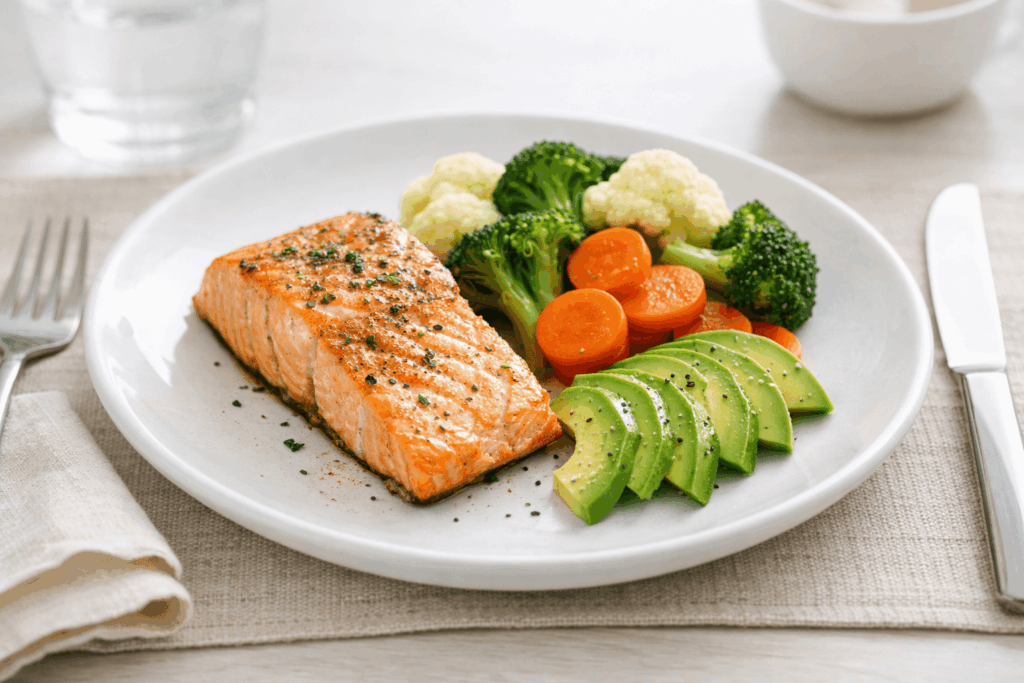
Plain unsweetened yogurt, vegetable purees, well-cooked scrambled egg, soft-textured proteins such as shredded chicken or mild fish.
This post-bariatric feeding phase has its own rules:
- Chew slowly and mindfully — your stomach no longer has the same capacity as before.
- Eat small portions several times a day
- Stop eating as soon as you feel full, even if it seems like very little.
One of the most common mistakes at this stage is eating quickly out of habit. There's no rush. Your body is learning a new rhythm, and so are you.
From month 2 onwards: going back to eating real food
This is the phase that our patients look forward to the most, and also the one that requires the most attention. Reintroducing solid foods doesn't mean going back to old habits. It means building a new relationship with food.
The priorities at this stage are clear:
- Prioritize: lean protein (chicken, fish, egg, legumes), cooked vegetables and fruit without added sugar.
- Put off: refined carbohydrates, white flour, sugars and processed foods.
If they did one to you gastric sleeve, Your stomach capacity is permanently reduced, so the quality of what you eat matters more than the quantity. In the case of gastric bypass, Nutrition has additional considerations related to nutrient absorption — which is why continuous medical monitoring is not optional.
What foods should be avoided after surgery?
Part of understanding life after bariatric surgery is recognizing that some foods are simply no longer acceptable. They are not compatible with your new digestive system. — at least not in the early stages, and some never again in the same way.
The main ones you should avoid:
- Carbonated beverages: They put pressure on the reduced stomach and can cause pain and inflammation.
- Sugar and concentrated sweets: They can trigger dumping syndrome — nausea, dizziness, and diarrhea shortly after eating
- Fried foods and saturated fats: difficult to process and can stall your weight loss
- Alcohol: It is absorbed much faster after surgery, with unpredictable effects.
- Ultra-processed foods: Empty calories that do not nourish and generate inflammation.
Does it mean you'll never be able to enjoy anything again? No. It means that you will learn to choose better — and many of our patients tell us that, over time, their tastes changed naturally.
Read also:
👉 ?What happens if you don't follow the diet after bariatric surgery?
How long does the diet last after bariatric surgery?
A common question among patients is how long the entire dietary adaptation process takes.
The initial phases of a diet following bariatric surgery typically last between four and eight weeks. During this period, the body transitions from liquids to solid foods.
However, changing eating habits is part of the long-term process. Maintain a balanced diet, with an emphasis on protein and nutritious foods, helps to sustain the results of the procedure.
Over time, most patients learn to recognize the signs of satiety and choose foods that better suit their new routine.
How New Body Surgery Miami supports its patients after surgery
The bariatric process does not end in the operating room. Recovery and subsequent support are an important part of the patient's experience.
In New Body Surgery Miami, Each patient receives guidance on nutrition and follow-up care after surgery. The goal is to help make the transition to the new diet as comfortable as possible.
The medical team guides patients through each stage of the process, from the first weeks of recovery to adapting to a balanced diet.
This support allows many people feel safer while building new lifestyle habits.
Your new life begins with a consultation. Contact us today.
Frequently asked questions about diet after bariatric surgery
Most patients begin introducing solid foods between four and eight weeks after the procedure. The process is gradual, progressing from liquid diets to purees and soft foods before moving on to solid food.
The diet following bariatric surgery typically recommends foods rich in protein and easy to digest, such as shredded chicken, mild fish, eggs, plain yogurt, and cooked vegetables. Portions are usually small and eaten slowly.
After bariatric surgery, many specialists recommend avoiding carbonated drinks, fried foods, sweets with high sugar content, alcohol, and highly processed products, especially during the first weeks of recovery.
After the procedure, many patients eat five to six small meals a day. This pattern helps maintain stable energy levels and facilitates digestion with the new stomach size.
Following a diet after bariatric surgery helps the body adapt to the new digestive system, promotes recovery, and helps maintain the results of the procedure in the long term.