
Have you heard about the adjustable gastric band? And you're wondering if this procedure could be the right solution for your weight loss journey?
For years, this surgery represented one of the most popular options for treating obesity in the United States.
However, the landscape of bariatric surgery has changed significantly in the last decade, bringing new possibilities that deserve your attention.
What is an adjustable gastric band?
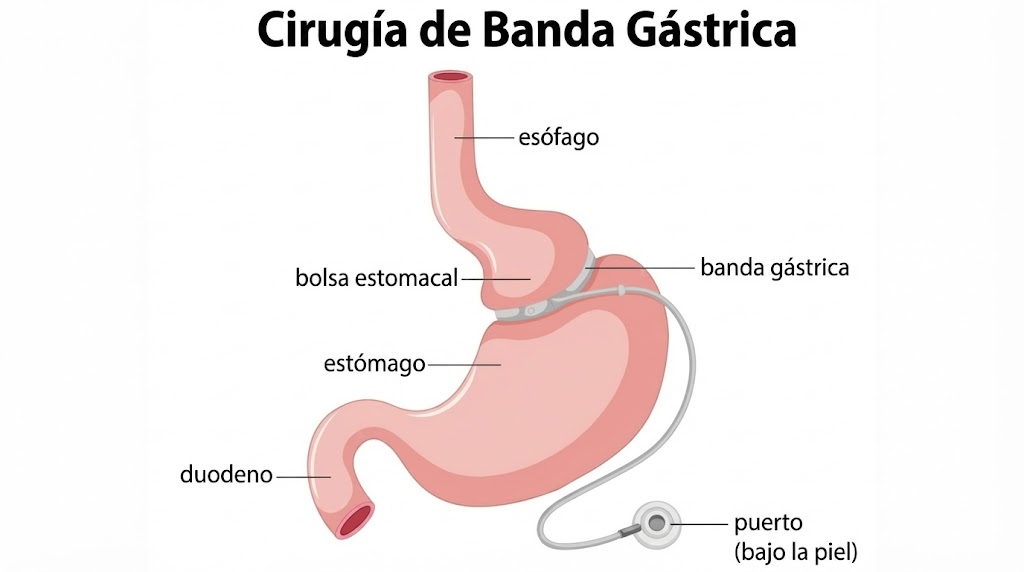
The adjustable gastric band It consists of a silicone ring placed around the upper part of the stomach during laparoscopic surgery. This device creates a small pouch that limits the amount of food you can eat at each meal.
The difference lies in the adjustment system: through a small device placed under the skin of the abdomen, Your doctor can tighten or loosen the band as needed., without the need for further surgery.
Approved by the FDA in 2001, the adjustable gastric band quickly gained popularity. Thousands of Americans They chose this procedure because of its less invasive nature. when compared to other bariatric surgeries available at the time.
Advantages of the adjustable gastric band
The adjustable gastric band offers specific benefits that make it attractive to certain groups of patients.
1. Complete reversibility
Unlike others bariatric surgeries, the adjustable gastric band can be completely removed.
Your stomach returns to its original size and function, offering a sense of security for many patients who fear permanent changes.
2. Faster recovery
Most patients is discharged from the hospital the same day or after one night of observation.
You can return to normal activities in about a week, a considerably shorter period than surgeries such as gastric bypass.
3. Customization through settings
Your body is unique, and the adjustable gastric band recognizes this. During follow-up appointments, The surgeon adds or removes saline solution from the system, adjusting the level of restriction. as your weight loss progresses and your needs change.
4. Less invasive procedure
The surgery does not involve cutting or removing parts of the stomach or intestine. This aspect It minimizes the risk of severe nutritional complications and reduces surgical time. to approximately 30 to 60 minutes.
Disadvantages you need to know
Despite the benefits presented, the adjustable gastric band has significant limitations that deserve careful attention.
1. Worrying revision rate
Data from the American Society for Metabolic and Bariatric Surgery show that Approximately 40 to 60% of patients with adjustable gastric banding require revision surgery within 10 years.
This represents a significantly higher rate than other modern bariatric procedures.
2. Slower and more variable weight loss
While surgeries like the gastric sleeve can result in a loss of 60 to 70% of excess weight, The adjustable gastric band typically reaches 40 to 50%.
Furthermore, results vary greatly between patients, and weight regain is not uncommon.
3. Device-specific complications
Mechanical problems include band slippage, inward erosion of the stomach, gastric pouch dilation, and defects in the adjustment system.
Each of these complications generally requires additional surgery for correction.
4. Ongoing commitment to adjustments
You will need to visit your surgeon regularly for band adjustments. These consultations continue indefinitely as long as you keep the device, representing a long-term commitment to your treatment.
5. Permanent dietary restrictions
Fibrous foods, dried meats, and breads can cause discomfort or blockage.
Many patients report episodes of vomiting when they eat too quickly or do not chew well enough.
Modern alternatives to the adjustable gastric band
While the adjustable gastric band was a popular option for years, today there are more effective, safer procedures with better satisfaction rates among patients and specialists.
1. Vertical sleeve gastrectomy
It is a surgery where Approximately 80% is extracted from the stomach. A narrow tube is left in place, which limits the amount of food and reduces the hunger hormone (ghrelin).
Advantages:
- Rapid and sustained weight loss.
- It does not require implants.
- It improves conditions such as hypertension and type 2 diabetes.
2. Gastric bypass
He gastric bypass It is considered one of the most comprehensive techniques. It creates a small gastric reservoir and connects directly to the small intestine, reducing both the amount of food and its absorption.
Advantages:
- High weight loss.
- Very good results in diabetes control.
- Lower risk of long-term regain.
3. Intragastric balloon
He intragastric balloon It's an option non-surgical, which involves inserting a silicone balloon into the stomach via endoscopy. It takes up space and creates a feeling of fullness.
Advantages:
- Outpatient procedure.
- Without incisions.
- Recommended for people with a BMI between 30 and 40.
4. Endoscopic gastroplasty (ESG)
Also called an "endoscopic sleeve" procedure, it is performed endoscopically, without incisions. They apply internal sutures that reduce the size of the stomach.
Advantages:
- Less invasive technique.
- Fast recovery.
- An alternative for those who cannot or do not want surgery.
Quick comparison
| Procedure | Guy | Invasiveness | Reversible | Weight loss | Complications | Current use in the U.S. |
| Adjustable gastric band | Surgery | Low | Yeah | Slow | High | Very low |
| gastric sleeve | Surgery | Moderate | No | High | Average | High |
| Gastric bypass | Surgery | High | No | Very high | Average | High |
| Intragastric balloon | Endoscopic | Low | Yeah | Moderate | Low | Moderate |
| ESG endoscopic gastroplasty | Endoscopic | Low | Yeah | Moderate | Low | Growing |
Who can benefit from the adjustable gastric band today?
Although the adjustable gastric band has lost popularity, it can still be useful for specific patients:
- People who cannot undergo more invasive procedures due to complex medical conditions
- Very young patients who want a reversible option
- Individuals with a BMI between 30 and 35 with significant comorbidities
- People committed to frequent medical follow-up and regular adjustments
Ideal candidates have a BMI above 40, or over 35 with obesity-related conditions such as type 2 diabetes, hypertension, or sleep apnea.
Your commitment to permanent lifestyle changes determines success regardless of the procedure chosen.
How do you know if an adjustable gastric band is right for you?
Nowadays, This technique is only considered in very specific cases., such as patients with specific conditions that preclude other surgeries.
The best way to determine the most appropriate procedure is to consult with a specialized medical team., like the one you'll find at New Body Bariatric Center.
During the consultation, your medical history, BMI, habits, goals, and other important aspects will be analyzed to define the best path for you.
The team of New Body Bariatric Center, In Miami, we can help you make an informed decision. Here We work with the latest techniques and a personalized approach for each patient.
Frequently Asked Questions
It has a low immediate surgical risk, but higher rates of long-term complications.
Yes, but another surgical procedure is required.
Yes. It is possible, although medical supervision and adjustments during pregnancy are recommended.
It has limited impact. Gastric bypass and sleeve gastrectomy have better results for this condition.
It takes between 1 and 2 weeks to resume normal activities, but adjustments require continuous monitoring.