If you're looking to transform your abdomen but aren't sure if you need a... lipo 360 or a tummy tuck (abdominoplasty), You're not facing a minor question.
These are two different procedures that solve different problems, and choosing the wrong one can mean results that don't align with what you really need.
This guide clearly explains what each one does, how they differ, and how to know which one best suits your anatomy and goals.
What is 360 liposuction?
The lipo 360 It is a liposuction technique that Eliminates localized fat around the entire waistline in a single surgical session.
Unlike the traditional liposuction, Lipo 360, which acts on a specific area, works simultaneously on the upper abdomen, lower abdomen, flanks and lumbar area, achieving a more defined silhouette from all angles.
What 360 liposuction doesn't do is equally important: it doesn't remove excess skin or repair separated abdominal muscles. Its results depend directly on the quality of each patient's skin.
The candidates who get the best results with lipo 360 are those with good skin elasticity, stable weight, and fat deposits that do not respond to diet and exercise.

What is a tummy tuck?
He tummy tuck, clinically known as abdominoplasty, It is a surgical procedure that It removes excess abdominal skin and, when muscle separation exists, repairs the rectus abdominis muscles (diastasis recti).. It is not a procedure to remove fat: its aim is to restore the structure of the abdomen when the skin and muscles have lost their ability to recover on their own.
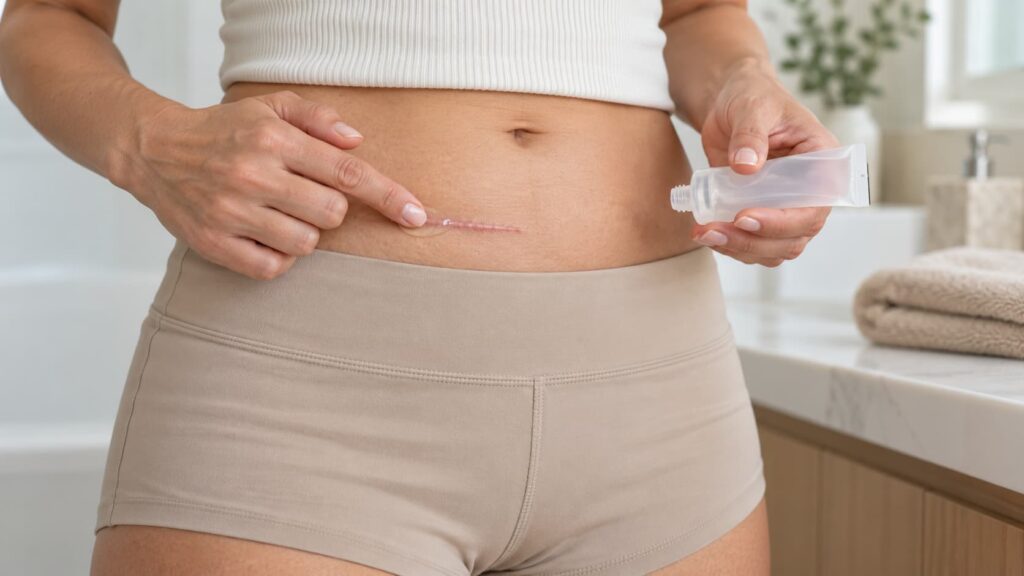
The incision is made in the lower abdomen, in a position that is usually hidden under underwear or a swimsuit.
The Mayo Clinic It describes abdominoplasty as a procedure indicated especially for people who have experienced pregnancies, significant weight loss, or changes in body composition that result in loose skin and weakness in the abdominal wall.
Abdominoplasty was among the five most in-demand surgical procedures in the US in 2023, according to data from the ASPS, with a volume that reflects its relevance especially among women after motherhood or after significant weight loss.

Comparison lipo 360 vs tummy tuck
| Criterion | Lipo 360 | Tummy tuck |
| Main objective | Eliminate localized fat | Remove excess skin and tighten the abdominal wall |
| Does it eliminate fat? | Yeah | Not primarily (can be combined with lipo) |
| Does it eliminate sagging skin? | No | Yeah |
| Does it repair muscles? | No | Yes, when there is diastasis |
| Type of incision | Small marks from the cannula | Horizontal incision in the lower abdomen |
| General recovery | Return to light activity in 5–7 days | More rest for the first 2–3 weeks |
| Ideal candidate | Good skin elasticity, localized fat in waist | Loose skin, muscle separation, post-pregnancy or post-bariatric |
If your primary concern is localized fat with good skin elasticity, 360 liposuction may be sufficient. If there is excess skin or muscle separation, a tummy tuck addresses the root cause of the problem; liposuction alone will not solve it.
Can 360 liposuction eliminate sagging skin?
No. Lipo 360 removes fat, but has no effect on excess skin.
When skin elasticity is good, The tissue can retract naturally after liposuction, and the result looks firm.. When elasticity is reduced, whether due to age, multiple pregnancies, or significant weight loss, removing fat without intervening in the skin can make sagging more noticeable.
Only a clinical evaluation can determine the true condition of your skin and which procedure is appropriate for your specific anatomy.
Important note: Patients who have undergone bariatric surgery, such as gastric sleeve Patients who have undergone gastric bypass surgery often experience reduced skin elasticity once they reach their target weight. In these cases, evaluation by a board-certified surgeon is essential to determine if abdominoplasty is part of the postoperative body contouring plan.
When does it make sense to combine the two procedures?
In many cases, 360 liposuction and tummy tuck They are performed in the same surgical session to achieve a more complete result.
Abdominoplasty treats the skin and muscles of the abdomen, while liposuction refines the contour of the flanks, lower back and other adjacent areas, creating a balanced silhouette from all angles.
The patient profiles that most frequently benefit from this combination are:
- Postpartum women with accumulated fat on the flanks and loose skin or muscle separation in the abdomen after one or more pregnancies.
- Post-bariatric patients who, after losing significant weight through gastric sleeve or bypass surgery, need to reshape their body contour and remove excess skin that the body cannot recover on its own.
- People with moderate to significant weight loss that present a combination of tough fat and skin tissue without enough elasticity to retract.
Performing both procedures in a single intervention can, in many cases, reduce the total recovery time compared to performing them separately, as well as optimize the overall aesthetic result.
Recovery: what to expect in each case?
Recovery varies considerably between the two procedures. Here's a practical guide to what typically happens in each case:
Recovery after liposuction 360
- Use the compression belt From the first post-operative day for the time indicated by your surgeon; it reduces inflammation and helps the skin adapt to the new contour.
- Resume light activities (walking, simple daily tasks) from the fifth to the seventh day, depending on your progress.
- Wait until the swelling is visible for three to six weeks; the final result is clearly visible after two to three months.
- Avoid high-impact exercise for at least four weeks to protect the treated areas.
Recovery after tummy tuck
- Maintain relative rest For the first two to three weeks; walking in a slightly forward-leaning position is normal and expected in the first few days.
- Respect the physical exertion restrictions for four to six weeks, especially for lifting weights or activating abdominal muscles.
- Follow the scar care protocol as advised by your medical team; the appearance of the incision improves progressively during the first twelve months.
- It anticipates that the total inflammation It can take up to three months to fully resolve, according to the Mayo Clinic.
How do you know which procedure is right for you?
The answer depends on your anatomy, not a general preference. Your skin elasticity, the presence or absence of diastasis recti, fat distribution, and your medical history, including any previous bariatric surgery, are the factors that determine which procedure will truly address your situation.
In New Body Surgery Miami, The surgical team is comprised of board-certified plastic and bariatric surgeons, a rare combination of specialties that allows them to guide patients from the weight loss process to their final body contour. Located in Kendall, Miami, the clinic serves patients in Spanish and English, with transparent pricing and a free initial consultation.
This makes a real difference for those who come with questions about combined procedures or with a bariatric history: the team understands the physiology of rapid weight loss, the skin condition in post-bariatric patients, and how to plan for a lasting and proportionate result. There's no need to explain your history from scratch or consult with different specialists in different locations.
If your goal is a more defined abdominal contour and you have doubts about which procedure is right for you, The first step is an actual clinical evaluation., without obligation.
New Body Surgery Miami
Ready to take the next step?
Schedule your consultation and find out if you're a candidate. No obligation — just an honest conversation about your situation.
Contact us today